Pipe Repair & Repiping for your home
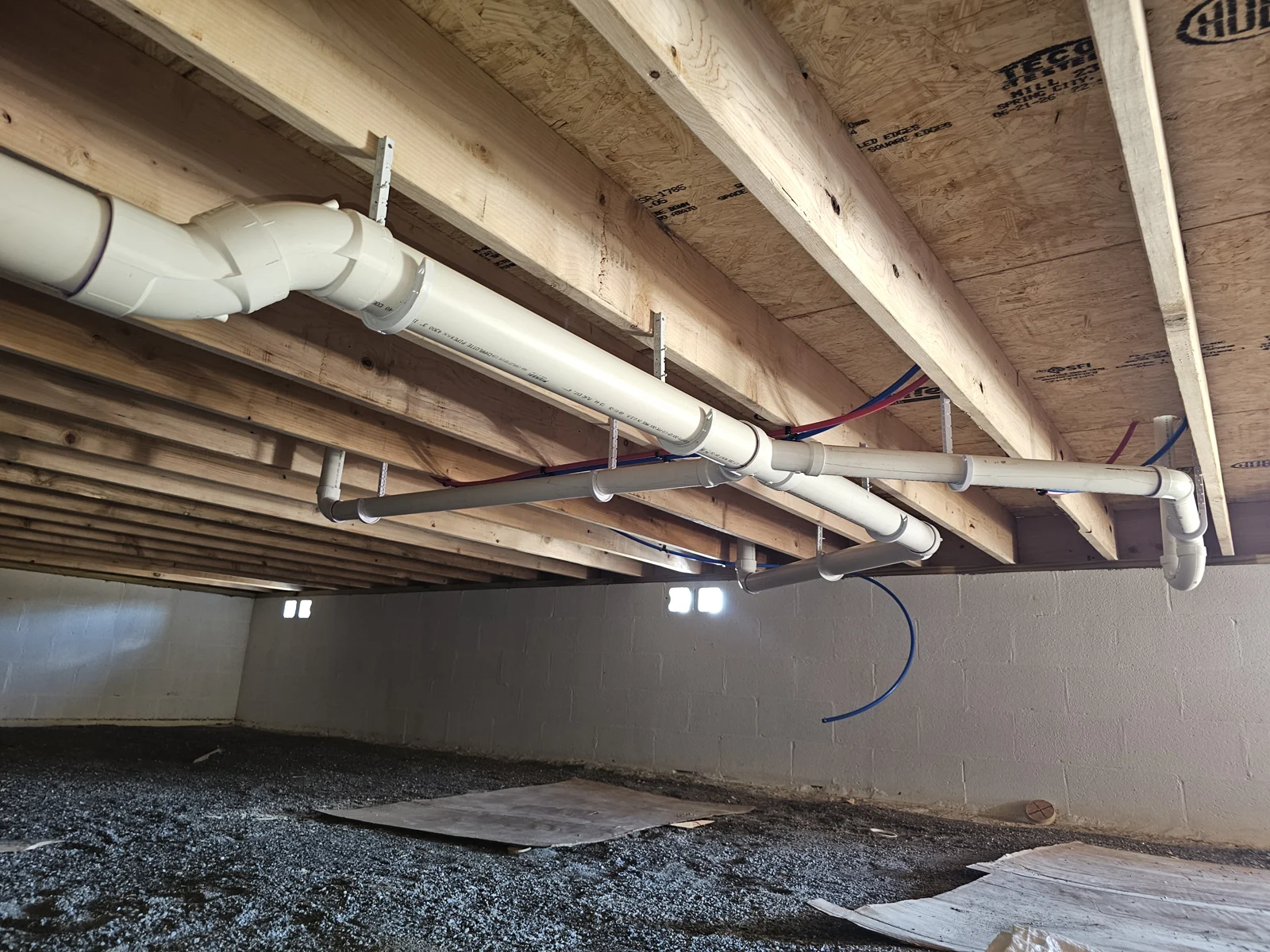
Older, damaged, or leaking pipes can affect the whole home. M&M Plumbing repairs and replaces both water-supply lines and drain lines—from leaking water pipes to damaged wastewater piping. Water-supply options include copper, PEX, and CPVC where appropriate; drain-line materials are selected for the existing system and the work needed.
How we can help
- Water-supply line repairs and replacement
- Drain-line repairs and replacement
- Frozen pipe damage assessment
- Partial and whole-home repiping
- Valve replacement and plumbing upgrades
What to have ready when you call
We discuss the affected areas, pipe condition, access needs, and the scope of replacement. Ask about expected water interruptions and any wall or finish repairs before work begins.
What is repiping?
Repiping replaces part or all of a home’s water-supply piping. It can be worth considering when leaks keep appearing in different places, pipe condition is deteriorating, or restrictions inside old lines affect flow. A single damaged section may only need a targeted repair.
Water-supply repiping and drain replacement are separate scopes of work. Replacing the pipes that bring water to your faucets does not automatically replace the lines that carry wastewater away.
Benefits of replacing worn piping
- Fewer recurring failures: Replacing deteriorated sections addresses the underlying pipe condition rather than repeatedly patching leaks.
- Better flow where old pipes are restricted: Correctly sized replacement piping may improve delivery. It will not fix every pressure problem; the incoming supply and valves also matter.
- Updated connections and shutoffs: A planned project can include accessible valves and compatible fittings.
- Planned disruption: Coordinating replacement allows you to discuss access, water shutoffs, and finish repairs before work begins.
Water-supply pipe options
Supply piping carries pressurized drinking water. Materials must be suitable for the intended temperature, pressure, and installation.
Why consider PEX for your repiping project?
Older galvanized water lines can develop corrosion and internal buildup. When those pipes are worn or restricted, replacing them with appropriately sized PEX can address the deteriorated piping and improve water delivery where that restriction was the cause.
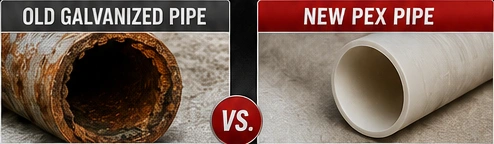
The comparison illustrates corrosion inside an old galvanized pipe and the open interior of new piping. Your home’s pipe condition needs its own assessment.
- No rust in the tubing: PEX is plastic, so the tubing does not develop the rust associated with galvanized steel.
- Flexible routing: It can bend around suitable routes, which may simplify installation in an existing home.
- Fewer connections on suitable runs: Long, continuous lengths can reduce the number of joints needed compared with a layout built from short rigid sections.
- Scale and chlorine resistance: PEX resists mineral buildup and is available with chlorine-resistance ratings for drinking-water use. Select the rating suited to the system’s temperature and operating conditions.
- Quieter pipes with less water hammer: Flexible tubing can help dampen pressure surges and reduce noise. Proper supports, pressure control, and water-hammer arrestors may still be needed.
- Long-lasting performance: Drinking-water PEX standards require a minimum 50-year projected life under specified chlorine-resistance test conditions. Actual service life depends on the product, installation, water conditions, and use; this is not a 50-year warranty.
- A planned replacement: Replacing deteriorated supply lines can reduce the need to repeatedly repair those same old pipes.
Good results depend on correct sizing, compatible fittings, installation, and protection from damage. PEX can still leak or suffer freeze damage, and repiping does not fix every pressure or water-quality problem. Discuss the existing supply, water conditions, access, and manufacturer requirements before choosing your system.
Technical guidance: Plastics Pipe Institute PEX installation guidance and chlorine-resistance and projected-life guidance.
Drain, waste, and vent options
Drain lines carry wastewater; vent lines help the drainage system work properly. These materials and fittings serve a different purpose from pressurized supply pipes.
Material selection depends on the application, existing plumbing, access, budget, and applicable requirements. Color alone does not establish a pipe’s rating. Ask us which options fit your project rather than choosing one material for every part of the system.
Material references: Plastic water-supply piping, copper plumbing, and plastic pipe applications.
Planning your repiping project
Ask which lines will be replaced, how the new piping will be routed, how long water may be off, and who handles wall or finish repairs. Discuss testing and any inspection requirements as part of the agreed scope. A review of your existing system helps separate necessary replacement from piping that can remain in service.
Common questions
Does every pipe problem require whole-home repiping?
No. A localized problem may need a targeted repair. Recurring leaks or widespread deterioration may warrant a broader replacement plan after inspection.
Do you serve both Rogersville and Greeneville?
Yes. Our home base is in Rogersville, and our Greeneville operations warehouse supports service in Greene County. Call the line for your area to discuss your address and scheduling.
How do I get an estimate?
Call or submit a request using our contact form. Include your location and a description of the problem or project. We will discuss the information needed and the next step for an estimate.